Guides
How to choose a security camera: resolution, lens and retention time
The most common mistake in choosing cameras is starting the decision with resolution. "How many megapixels" is not a meaningful question until "what do I need to see at this point" has been answered.
Purpose first: detection, recognition or identification
The security industry distinguishes three different imaging purposes.
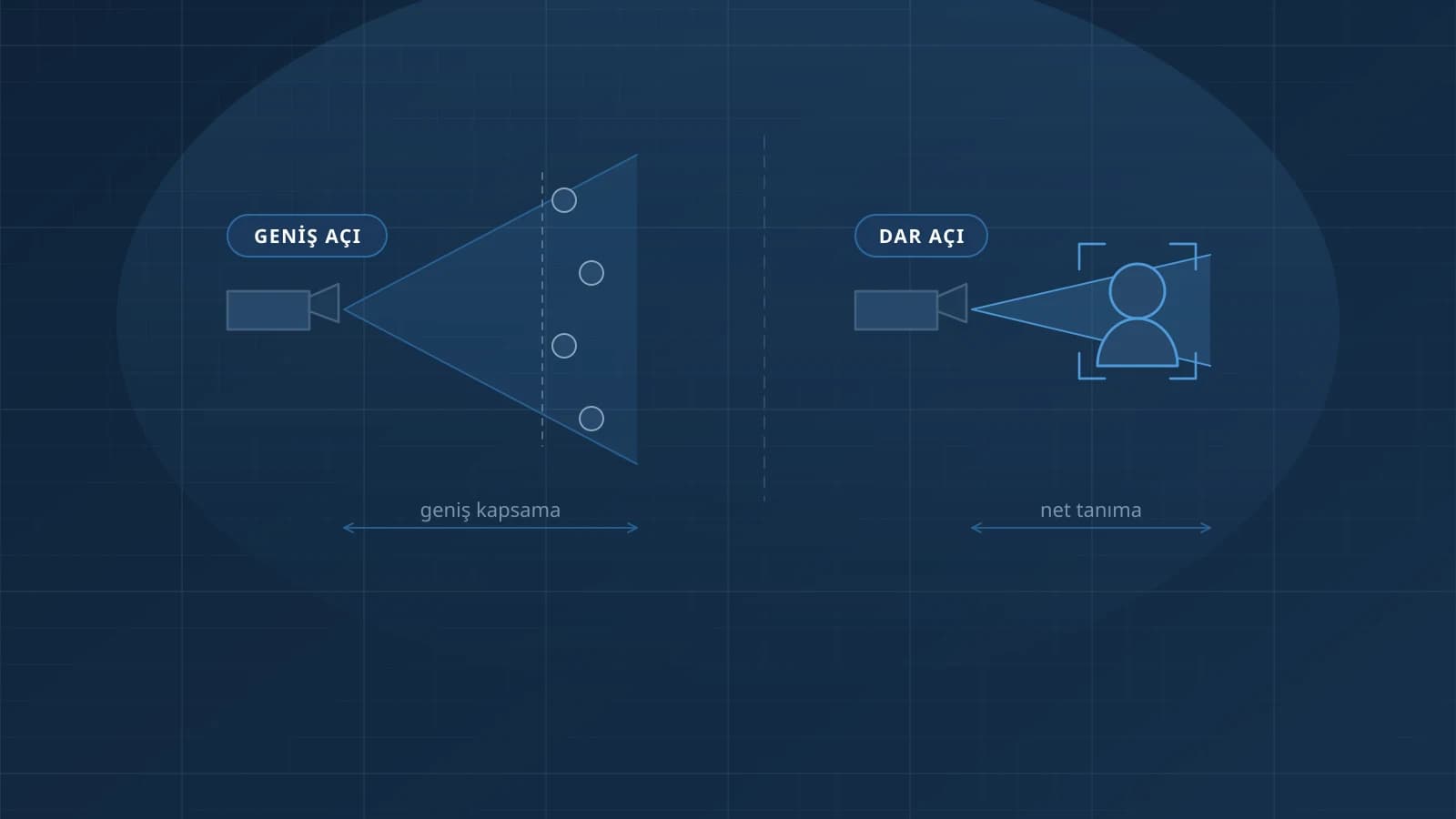
Detection — seeing that a person or vehicle is there. A warehouse aisle, a perimeter wall or a general car park view fall into this category; a wide angle and medium resolution are enough.
Recognition — being able to recognise someone you have seen before. A staff entrance corridor is an example.
Identification — being able to read the face of someone you do not know, or a vehicle's plate. Tills, entrance doors and barrier entries fall here; a narrow lens and high resolution are required.
All three purposes exist within the same facility. That is why "let's buy 4 MP cameras for the site" both falls short at some points and wastes disk space at others.
Lens angle: wider is not always better
A wide-angle lens shows more area, but every object in the image becomes smaller. A wide angle that renders a face clearly at 3 metres makes a face at 15 metres unrecognisable.
Practical rule: measure the distance from which the image will be captured at the critical point, and choose the lens accordingly. If that measurement was not taken during the survey, lens selection rests on guesswork.
Night vision
Cameras with infrared illumination produce black-and-white images in darkness. That is enough to see that a person is present, but it loses distinguishing information such as clothing colour.
If colour night vision is wanted, there are two routes: cameras with low-light sensors, or increasing ambient lighting. Planning both together gives a better result; changing only the camera usually fails to meet expectations.
Retention time: the most overlooked item
The disk space required depends on four variables: camera count, resolution, frame rate and retention period. When any one of them doubles, the disk requirement roughly doubles too.
Adding disks after the recorder has been bought means extra cost and an interruption in recording. Sizing correctly from the start is cheaper.
The most effective way to reduce the disk requirement is motion-triggered recording instead of continuous recording. In warehouses and at night, where movement is infrequent, this noticeably reduces the space needed.
A short checklist
- Has a purpose been set for each camera position: detection, recognition, identification?
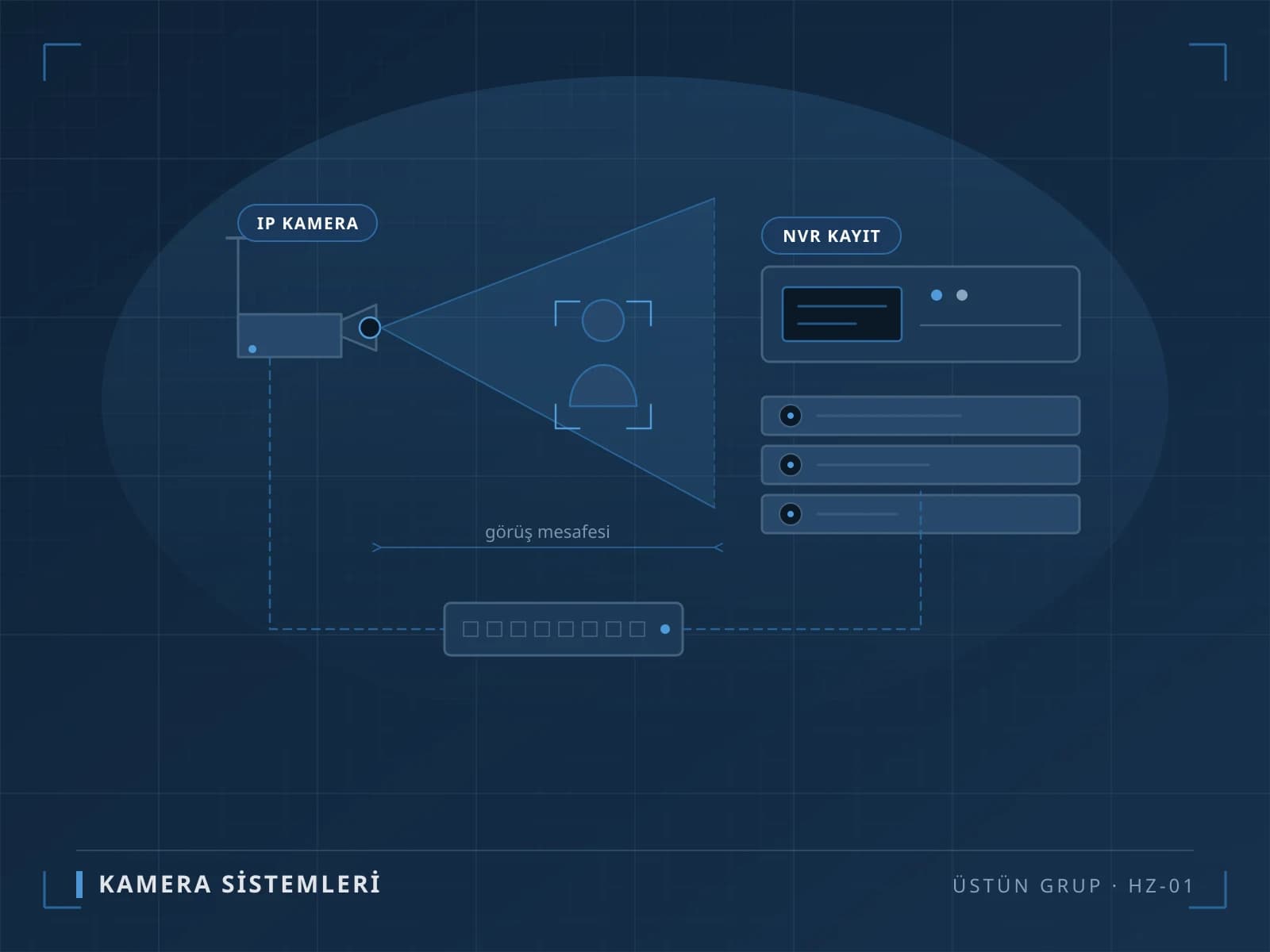
- Has the viewing distance been measured at critical points?
- Is the night vision expectation black-and-white or colour?
- How many days must be retained under regulation or internal rules?
- Is motion-triggered recording suitable?
If these five answers are clear, product selection is easy. If they are not, whichever product is bought, the result comes down to guesswork.